$45.00
Myrrh Gum is the naturally dried aromatic resin of the myrrh tree, treasured for thousands of years in traditional herbal and cultural practices. Its warm, earthy, balsamic aroma makes it a versatile botanical for both internal and external applications. Available in cut resin pieces and finely ground powder, Myrrh Gum may be used in teas, tinctures, herbal preparations, incense, and personal care formulations, making it a valued addition to any herbal collection.
UPC: 810206316184, 810206316191, 810206316207 & 810206316214.
Origin(s): Kenya, Somalia, Somaliland.
Latin Name(s): Commiphora myrrha, Commiphora molmol.
Also known as: Mo Yao, abyssinica, heerabol, common myrrh, Hirabol myrrh.
Plant Part(s) Used: Resin.
Herbs exhibit natural variations in their size, color, smell, and taste, with each batch and harvest showing differences influenced by environmental conditions and genetics.
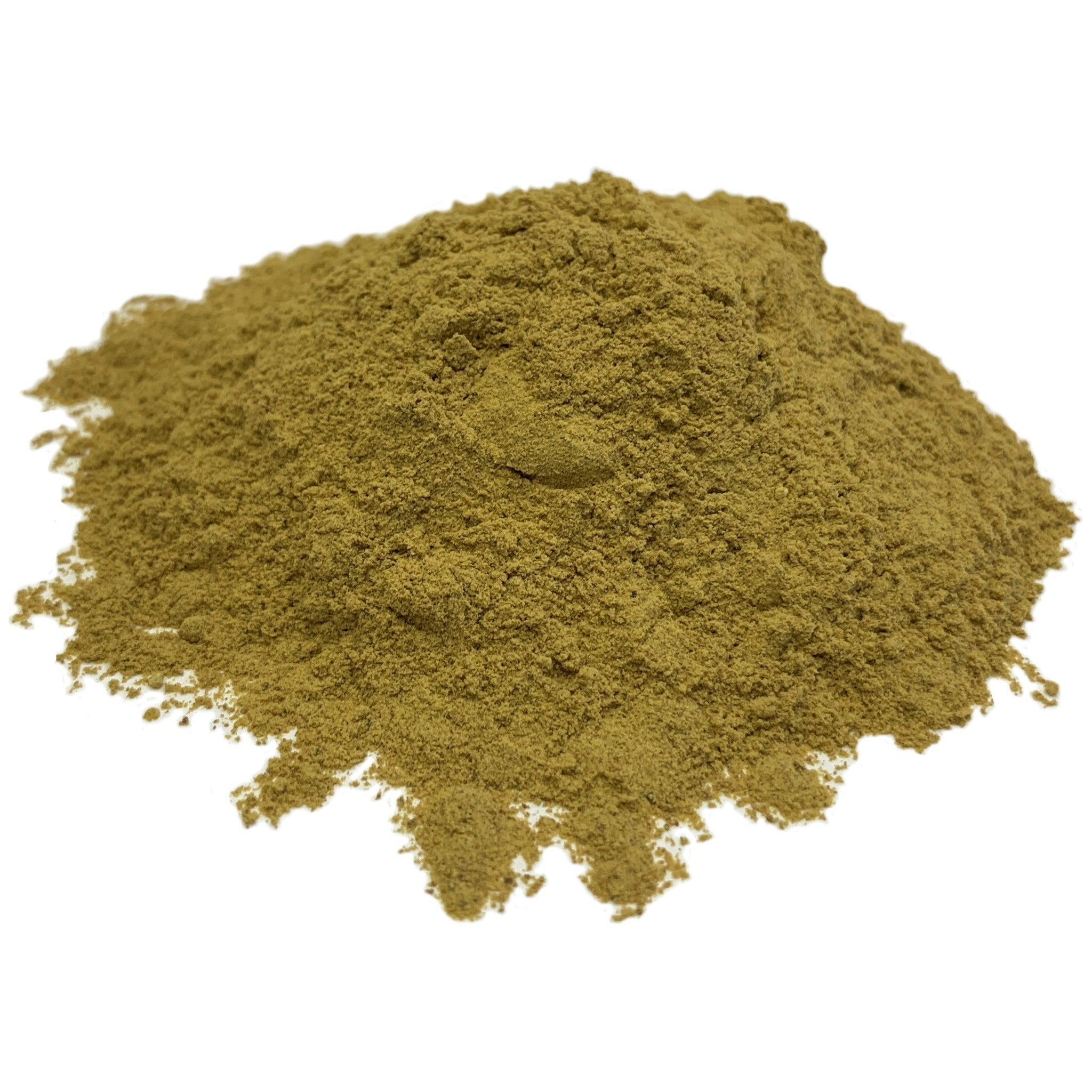
Appearance: Cut: Reddish brown. Powder: Light brown.
Aroma: Aromatic.
Taste: Bitter, acrid.
GMO Status: Non-GMO.
Allergen: None.
Additives: 0.5% to 2% silicon dioxide added to powder as an anti caking agent.
Applications / Preparations: Myrrh Gum, in both cut and powdered forms, may be used for herbal, aromatic, culinary, and personal care applications. Preparation methods vary depending on the form selected. Because external uses vary widely, customers should research reliable sources for preparation and usage methods.
Internal Use - Cut
Adults may take 1/4 to 1/2 teaspoon (approximately 0.5–1 g) once or twice daily (totaling roughly 1–2 g/day).
To prepare as a tea, pour 8–12 fl. oz. of boiling water over 1/4 to 1/2 teaspoon (approximately 0.5–1 g) of Cut Myrrh Gum. Cover and steep for 10–15 minutes, then strain and serve. Enjoy 1–2 cups daily.
Internal Use - Powder
Adults may take 1/4 to 1/2 teaspoon (approximately 0.5–1 g) once or twice daily (totaling roughly 1–2 g/day).
Capsules: For encapsulation, follow capsule machine manufacturer instructions. One teaspoon of powder is approximately 2 g, though weight may vary by density.
Powder in beverages/foods: Mix 1/4 to 1/2 teaspoon (approximately 0.5–1 g) of powder into 8 fl. oz. (240 ml) of water, juice, or blended into a smoothie. Stir or blend thoroughly and consume immediately.
External Use (Cut or Powder)
Myrrh Gum, in both cut and powdered forms, may be used in infused oils, salves, creams, ointments, poultices, compresses, mouth rinses, gargles, incense, soaps, lotions, and other personal care preparations. Because external uses vary widely, we encourage customers to research the best method and proportions for their needs.
Both cut and powdered Myrrh Gum may be prepared as teas, tinctures, extracts, herbal beverages, or other herbal preparations; blended into smoothies or other foods; infused into oils, alcohol, or glycerin; burned as incense or used in potpourri and aromatic blends; incorporated into salves, balms, creams, lotions, soaps, mouth rinses, gargles, and other DIY skincare and personal care products; and included in herbal crafting and traditional botanical preparations.
Storage: Store in a sealed container in a cool, dry place.
Shelf Life: It is very difficult to pin down an exact expiration date for most single herbs as they do not really expire, they lose potency or strength over time but will still have value. Unlike synthetic material or drugs, herbs can contain many constituents that contribute to their medicinal effects. Even if when we know what the active constituents are, there are often many of them in a single herb, each with different rates of degradation. Some herbs lose their effect more easily. Other herbs that possess more stable compounds such as alkaloids or steroids will last much longer.
A huge part of the degradation rate of herbs depends also on the storage conditions of the herb, & even on the quality of the herb before storage – how it was grown, harvested, dried & processed. If the product is left in hot places or open to sunlight then it will degrade much quicker than if it was stored in cool, dry place & sealed tightly.
A good rule of thumb is that herbs should be stored no longer than 2-3 years, but many herbs will have great strength much longer than that. To determine if an herb is still good you can check the appearance & aroma. Herbs that are no longer acceptable will have lost much of its vibrant color & will instead appear dull & faded. The bigger key though is to smell the raw materials to see if the potent aroma is still present.
Warning: Consult your healthcare provider before use if you are pregnant, nursing, taking medications, or have a medical condition. Not recommended for use during pregnancy. Discontinue use if irritation or digestive discomfort occurs.

$18.00
Alfalfa Leaf is a nutrient-rich herb traditionally valued for its mild, earthy flavor and natural...
$33.00
Aloe powder is derived from the dried inner portions of aloe leaves, long valued in...
$10.00
Angelica Root Extract 1 oz. 50% pure grain alcohol base. UPC: 810206310403 & 810206310410. Origin(s):...
© 2026 BestBotanicals. For educational purposes only. This information has not been evaluated by the Food and Drug Administration. This information is not intended to diagnose, treat, cure, or prevent any disease.